By Christine Cura
When buyers tour homes in Hunterdon County, they focus on kitchens, square footage, and lot size — and all of that matters. But one of the most overlooked factors in how much you'll love your home day to day is how well you sleep in it. I work with buyers throughout Flemington, Clinton, Raritan Township, and the surrounding area, and I've seen firsthand how the right bedroom — the right size, the right layout, the right separation from the rest of the house — changes how people feel about a property. Whether you're buying, building, or simply settling into a new space, here's how to create a bedroom that actually helps you rest.
Key Takeaways
- Light control, temperature regulation, and sound insulation are the three biggest environmental factors in sleep quality
- Layout choices like bed placement and clutter management affect how your brain winds down at night
- Home features like ceiling fans, dimmable lighting, and quality windows can be evaluated during a home search
- Small, intentional upgrades make a measurable difference without a full renovation
Light Control: The First Thing to Get Right
Light is the most powerful cue your body uses to regulate its internal clock. When your bedroom lets in too much light — from streetlights, a neighbor's driveway, or early morning sun — it works against your body's natural signals to stay asleep or wind down.
In Hunterdon County, many homes sit on wooded or semi-rural lots where exterior light is minimal, which is a real advantage. But even in quieter settings, the angle of morning sun through east-facing windows can wake you earlier than you'd like. Window treatments are one of the most affordable and impactful changes you can make.
What to look for and consider:
- Blackout curtains or cellular shades that block exterior light completely
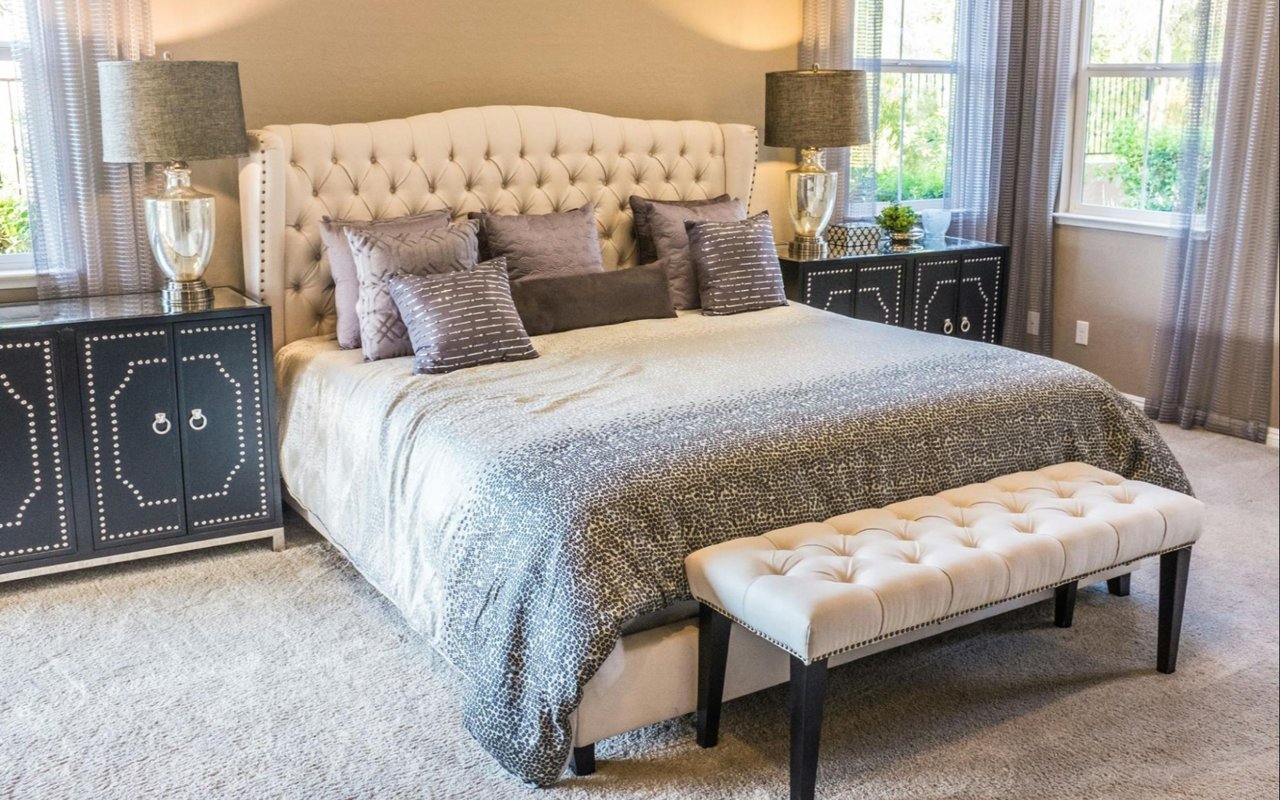
- Layered window treatments — a sheer for daytime privacy plus a blackout layer for nighttime
- Dimmer switches on bedroom overhead lights, which let you lower brightness gradually as bedtime approaches
- Warm-toned bulbs (rather than cool or bright white) in bedside lamps, which signal to your brain that it's time to wind down
- Limiting screens in the bedroom — the blue light from phones and tablets delays melatonin production even when the room itself is dark
When I'm showing homes, I always note which direction the primary bedroom faces. A west-facing room gets afternoon light and stays darker in the mornings, which tends to suit people who like to sleep in. An east-facing room floods with morning sun — that can be energizing or disruptive depending on your habits.
Temperature and Air Quality: More Than Comfort
Most sleep experts point to a range of around 60 to 67 degrees Fahrenheit as the sweet spot for quality sleep. A room that's too warm keeps your body from dropping its core temperature, which is part of how sleep is initiated. A room that's stuffy or poorly ventilated adds to restlessness.
In Hunterdon County's older homes — the Victorian colonials in Flemington's historic district, the farmhouses throughout Lebanon and Tewksbury Township — HVAC systems vary widely. It's worth knowing what you're working with before you move in.
Features that support temperature and air control:
- Ceiling fans with a reverse-direction setting, which helps circulate air in both summer and winter
- A programmable or smart thermostat that lowers the bedroom temperature automatically at night
- Windows that open fully and seal tightly — important for both ventilation and insulation
- Adequate insulation in exterior walls, which keeps bedrooms cooler in summer and warmer in winter without relying entirely on the HVAC system
- Air-purifying plants like snake plants or peace lilies, which can improve air quality and add a calming quality to the space
Sound and Separation: Protecting Your Sleep Environment
Noise is one of the most common reasons people wake up during the night, even when they don't remember doing so. In Hunterdon County, most residential areas are quiet by nature, but that doesn't mean sound isn't a factor inside the home.
Shared walls between bedrooms, rooms positioned near mechanical systems like furnaces or laundry, and primary suites that open directly onto a living area can all create sound issues that a fresh coat of paint won't fix.
What to assess when touring or setting up a bedroom:
- Primary suite location relative to the rest of the house — a bedroom at the end of a hallway or above a garage is typically quieter than one adjacent to common areas
- Wall thickness and insulation between rooms, especially in older construction
- Door quality — solid-core doors block significantly more sound than hollow-core ones
- White noise machines or a simple box fan, which can mask ambient household sounds effectively
- Keeping electronics — including televisions — out of the bedroom, which reduces both auditory and visual stimulation
Layout and Decluttering: What Your Brain Sees Matters
Visual clutter has a real effect on how quickly your mind settles at night. A bedroom that doubles as a home office, a storage overflow room, or a laundry staging area sends signals to your brain that the day isn't done. That's the opposite of what a sleep-friendly bedroom design should do.
In homes with open layouts, this can be a challenge to manage — but it's entirely solvable with intentional furniture placement and storage choices.
Layout principles that support better sleep:
- Position the bed away from the door and away from windows that let in light or noise
- Keep a clear path around both sides of the bed, which reduces visual tension in the room
- Store work-related items, exercise equipment, and screens in other rooms where possible
- Use built-in or well-chosen furniture with integrated storage to keep surfaces clear
- Reserve the bedroom for sleep and winding-down activities only — your brain will begin to associate the space with rest over time
FAQs
What home features should I prioritize when buying with good sleep in mind?
Primary suite placement matters most — look for a bedroom that's separated from the main living areas and away from street-facing walls. Quality windows with good seals, ceiling fans, and a layout that doesn't put the bedroom directly adjacent to mechanicals are all worth factoring in. These aren't always listed features, so it's worth walking through with an eye toward how the space will actually function at night.
Can I improve sleep quality in a bedroom that doesn't have ideal features?
Absolutely. Blackout curtains, a white noise machine, a smart thermostat, and decluttering can make a significant difference without touching the structure of the home. I find that buyers who move into imperfect spaces and make a few targeted adjustments are often just as happy with the result as those who started with the ideal setup.
Is primary suite location something real estate agents pay attention to?
A good buyer's agent will flag it. The location of the primary bedroom relative to the street, neighbors, mechanical systems, and common areas is a meaningful quality-of-life detail that doesn't always show up in listing descriptions. It's something I look at carefully when walking through homes with buyers in Hunterdon County.
Contact Christine Cura Today
Getting the details right — not just the square footage and the kitchen finishes, but the layout, the light, the feel of the spaces where you'll actually live — is what separates a good home from the right home. Reach out to me, Christine Cura, and I'll help you find a property in Hunterdon County that works for your whole life, including how well you sleep in it.
Whether you're just starting your search or ready to make a move, I'd love to connect and talk through what you're looking for.