By Christine Cura
A cluttered garage is one of the most common pain points homeowners deal with — and one of the easiest to solve with the right approach. Whether your garage has slowly become a catch-all for sporting equipment, seasonal decorations, tools, and everything in between, or you're starting fresh after a move, getting it organized is less about buying more storage and more about building a system that makes sense for how you actually use the space. These tips will help you get there.
Key Takeaways
- Start with a full declutter before buying any storage products
- Divide the garage into functional zones based on how you use it
- Vertical wall space is the most underused storage real estate in most garages
- The right system keeps the floor clear and makes everything easy to find
Declutter Before You Organize
The most common mistake people make when organizing a garage is skipping the declutter step. Adding shelves and bins to a space full of things you no longer need just moves the clutter around. Before buying a single storage product, pull everything out and sort it honestly.
Create three categories: keep, donate or sell, and toss. Be realistic. If you haven't used a piece of sports equipment in three years, it probably isn't coming back into rotation. Seasonal items you genuinely use belong in the keep pile. Duplicates, broken tools, and things stored in the garage simply because there was nowhere else for them should go.
Questions to Ask During the Declutter
- Have I used this in the past year?
- Do I own a duplicate that works better?
- Is this worth storing, or would replacing it when needed be easier?
- If I'm moving, would I pay to move this?
Build Your Garage Around Zones
Once the declutter is done, the most effective organizing strategy is to divide your garage into distinct zones based on function. Think of each zone as a mini-room with a specific purpose. When everything has a place — and that place makes sense — the garage stays organized on its own rather than defaulting back to chaos.
Common zones include a transition area near the interior door for shoes, bags, and grab-and-go items; an active zone for things you reach for regularly like bikes, yard tools, and sports gear; and a storage zone for seasonal items and things you access only a few times a year. Ceiling-mounted racks are ideal for the storage zone — they keep rarely used items off the floor entirely.
How to Think About Your Garage Zones
- Transition zone — near the interior door: hooks for bags and coats, a bench or shelf for shoes, a spot for mail or keys if needed
- Active zone — main floor area: frequently used tools, bikes, and sporting equipment within easy reach
- Storage zone — overhead and upper shelves: seasonal items, holiday décor, camping gear, and bulk storage
- Work zone — if applicable: a dedicated area for a workbench, tools, and any hobby or project supplies
Go Vertical on the Walls
Most garages have far more usable wall space than homeowners take advantage of. While floor space fills up fast, walls can hold a significant amount of gear with the right mounting systems. Wall-mounted solutions keep the floor clear and the space easier to move through.
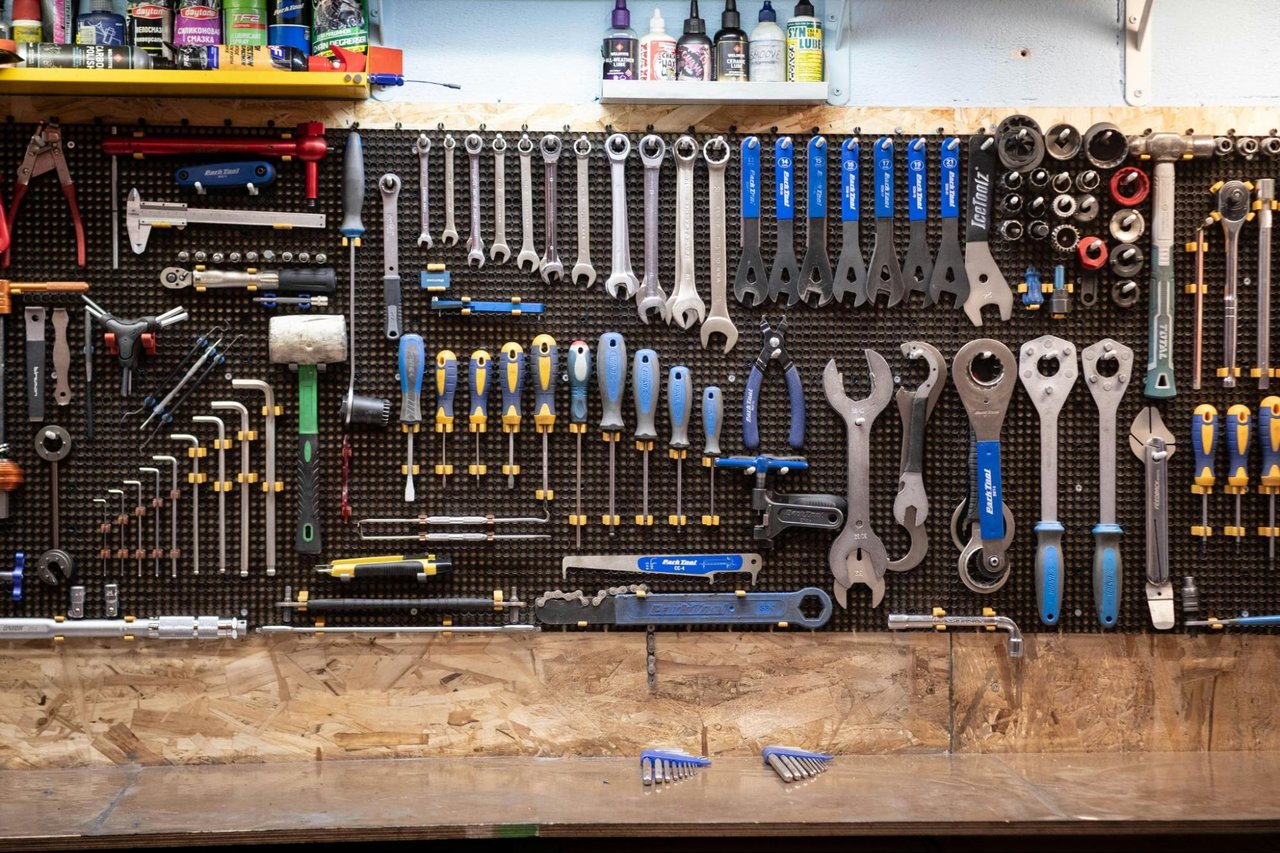
Pegboards are one of the most flexible options for tool storage — hooks and holders can be rearranged as your needs change, and everything stays visible. Slat wall panels offer similar flexibility with a cleaner look. For heavier items like bikes, wall-mounted racks hold them securely and free up significant floor space. Long-handled tools like rakes, brooms, and shovels can be stored flat against the wall on horizontal tension racks rather than leaned in a corner where they inevitably fall.
Wall Storage Solutions Worth Considering
- Pegboard or slat wall panels for tools and frequently grabbed items
- Wall-mounted bike hooks or racks to get bikes off the floor entirely
- Horizontal tension racks for long-handled yard tools
- Heavy-duty shelving units for bins, power tools, and larger equipment
- Magnetic strips for small metal tools and hardware
Use Consistent Bins and Clear Labels
Once your zones and vertical storage are in place, the final layer is containment and labeling. Consistent bin sizes create visual order and make stacking easier. Clear bins are ideal for storage zones where you need to see what's inside without pulling everything down — opaque bins work well for items you access more often, as long as they're labeled clearly.
Labels don't need to be elaborate — a label maker or masking tape with a marker works fine. The goal is that everyone in the household knows where things live and puts them back. That habit is what makes any organization system last.
Bin and Label Tips for a Lasting System
- Choose two or three bin sizes and stick to them throughout the garage
- Use clear bins for seasonal and archived storage so contents are visible
- Label every bin and shelf location, not just the bin itself
- Group like items together — one bin for extension cords, one for paint supplies, one for automotive supplies
- Revisit the system once a year, ideally in spring, to donate or toss anything that no longer belongs
FAQs About Garage Organization
What's the best way to store bikes in a small garage?
Wall-mounted bike hooks are the most space-efficient solution. They lift bikes off the floor entirely and free up the active zone for other uses. For households with multiple bikes, a vertical or horizontal wall rack system can hold several without taking up meaningful floor space.
How do I keep the garage organized once I've set it up?
The key is making it easy to put things back where they belong. When every item has a clearly labeled home and the system is built around how you actually use the space, maintenance becomes routine rather than a recurring project. A quick reset at the start of each season keeps things from drifting back toward clutter.
Is it worth investing in a full modular garage storage system?
It depends on how you use your garage and how long you plan to stay in your home. Modular systems from brands sold at home improvement stores are durable, adjustable, and genuinely improve the functionality of the space. If you're planning to sell in the near future, a clean, organized garage also makes a strong impression on buyers — so the investment can pay off beyond personal convenience.
Start Your Garage Transformation
An organized garage doesn't happen by accident — it takes a clear system, the right storage, and a commitment to keeping things in their place. The good news is that the project is far more manageable than it looks once you break it into steps. If you're preparing your home for the market and want guidance on how to present every space, including the garage, reach out to me, Christine Cura, and let's talk through what buyers in your area are looking for.